Is Epoxy Flooring Truly Waterproof? Insights and Benefits Explained
When considering flooring options, especially for commercial or high-traffic areas, one of the most common questions that arises is: will epoxy flooring be waterproof?
As the founder of Epoxy Flooring Co, I’ve encountered this question countless times. In this article, I will provide a thorough explanation of epoxy flooring’s waterproof properties, demonstrate its effectiveness with a real-world example, and explain why epoxy is an excellent choice for environments where moisture resistance is critical.
Let’s dive into the details and clear up any confusion about whether epoxy flooring truly keeps water out.
Understanding Epoxy Flooring and Its Waterproof Nature
Epoxy flooring is a type of durable surface coating made from a combination of resin and hardener. When applied correctly, it forms a hard, seamless, and highly resistant layer. One of the key benefits of epoxy flooring is its ability to create a continuous, joint-free surface, which significantly reduces the chance of water penetration.
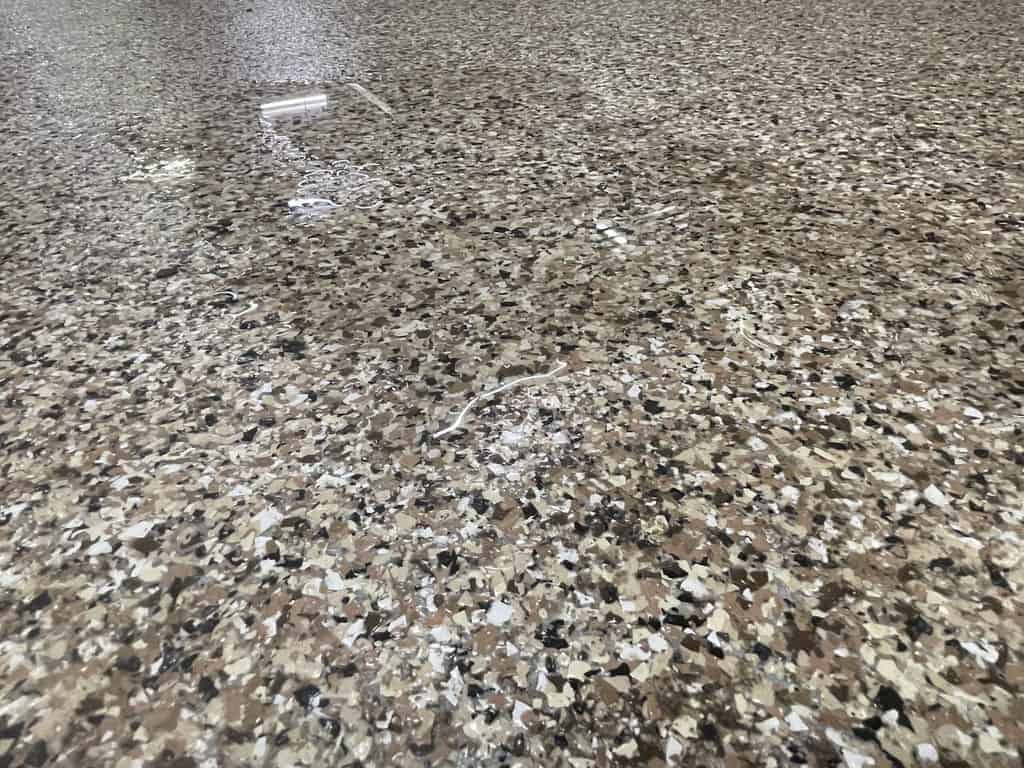
Specifically, I’m referring to a full flake seamless epoxy floor, a popular style that combines aesthetic appeal with robust functionality. The flakes embedded in the epoxy add texture and visual interest, but more importantly, the seamless nature of the application ensures that there are no cracks or gaps where water could seep through.
What Does Waterproof Mean for Flooring?
Before we go any further, it’s important to clarify what “waterproof” means in the context of flooring. A waterproof floor does not allow water to penetrate its surface. Instead, water remains on top, forming puddles or droplets that can be easily cleaned up without damaging the underlying substrate.
Many traditional flooring materials such as wood, carpet, or even some types of tiles can absorb moisture, leading to issues like mould, mildew, warping, or structural damage. Epoxy flooring, by contrast, acts as a protective barrier that prevents any moisture from getting through.
Demonstrating Waterproof Performance in a Commercial Kitchen
To demonstrate the waterproof nature of epoxy flooring, picture this: I’m standing in the middle of a busy commercial kitchen, where durability and hygiene are paramount. We installed a full flake seamless epoxy floor here about a year ago, and it has withstood the daily demands of this environment exceptionally well.
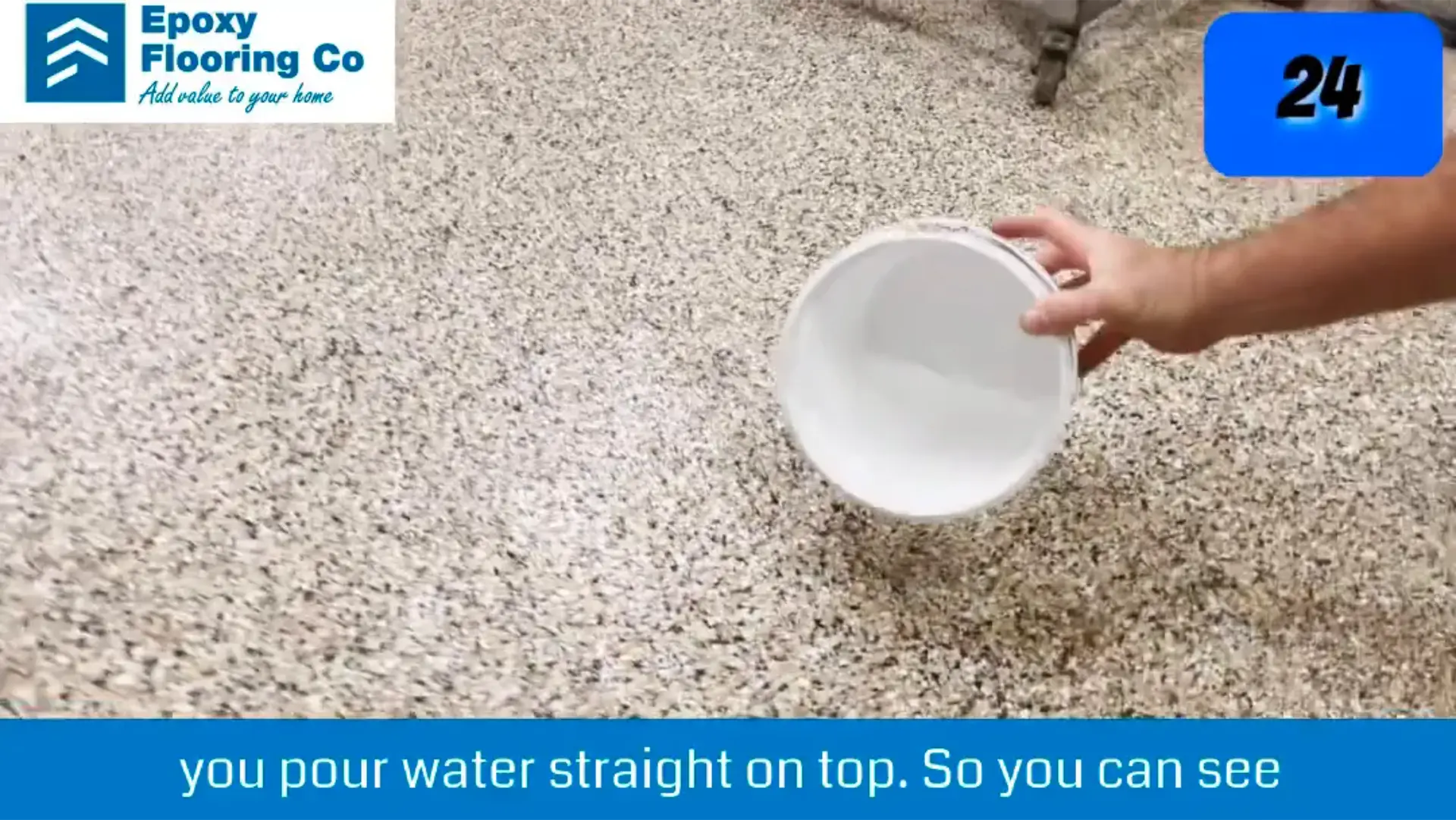
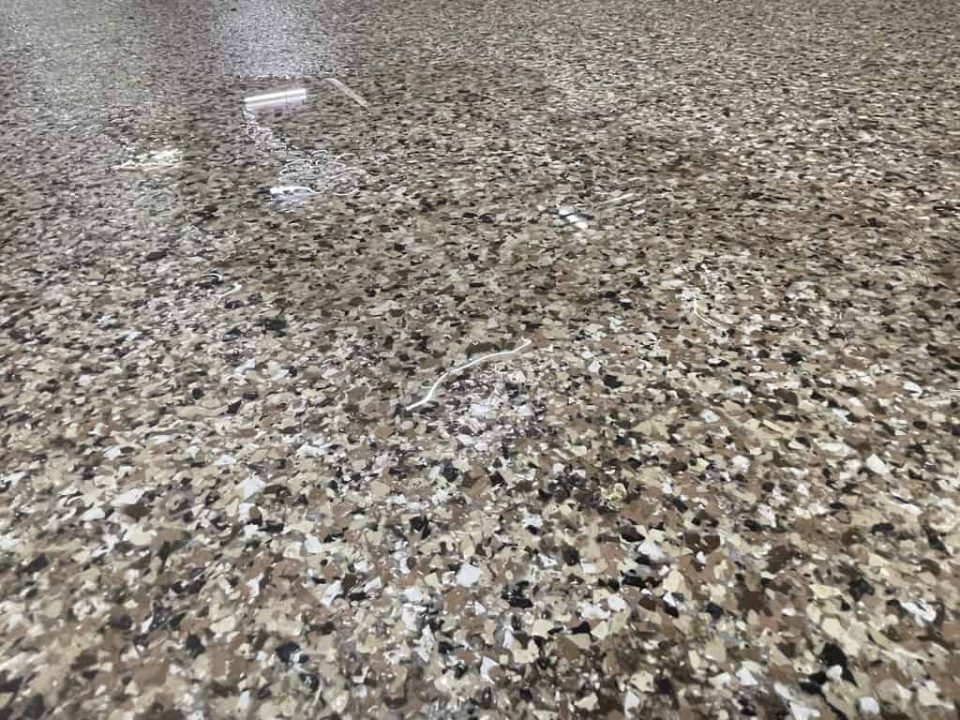
Let me show you exactly what happens when you pour water directly onto this floor. Watch as the water forms a large puddle on the surface, refusing to soak in or spread beneath the floor.
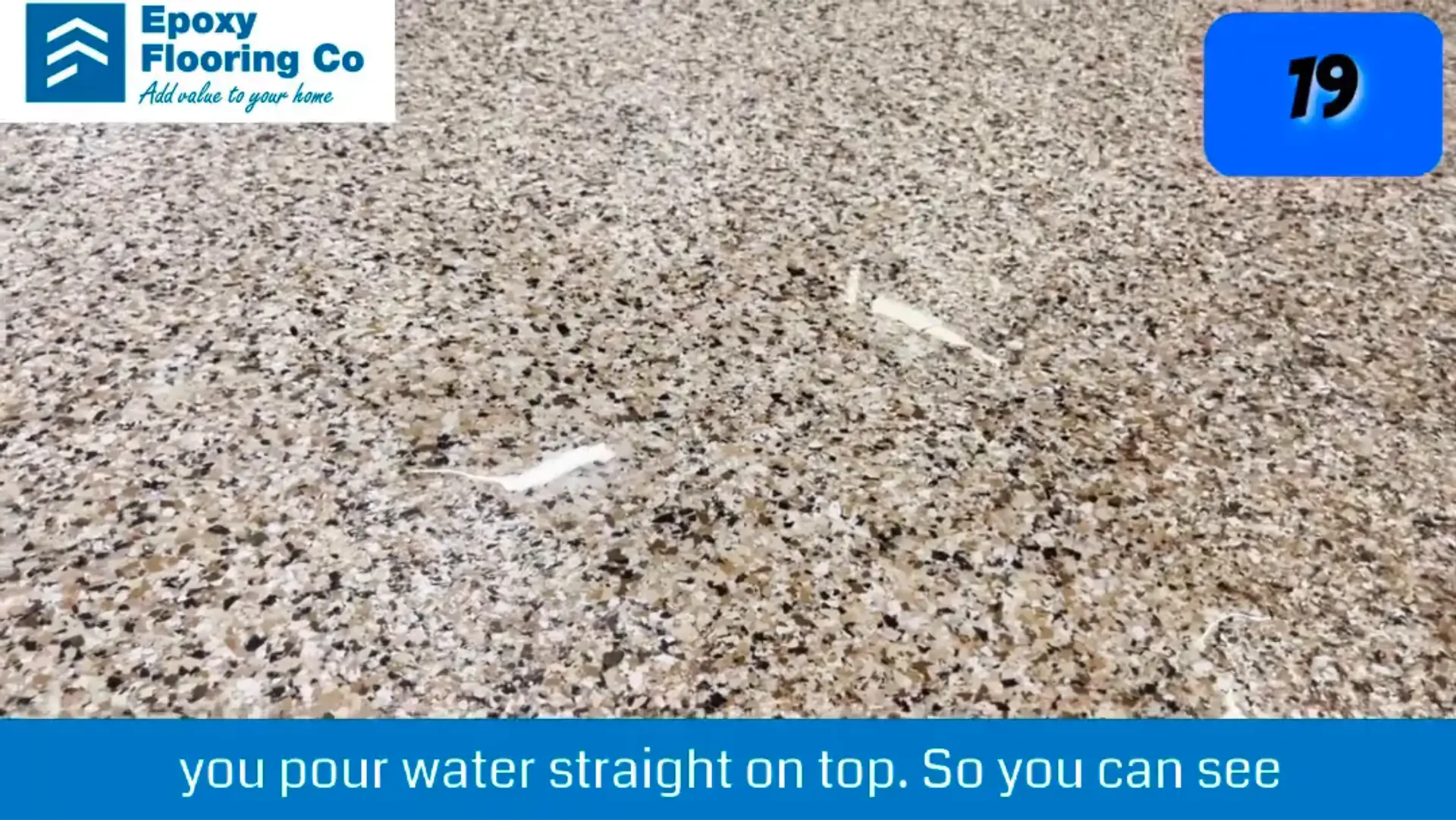
Every drop of water sits on top of the floor, undisturbed and completely separate from the material underneath. There is absolutely no absorption occurring. This simple yet powerful demonstration proves that the floor is indeed waterproof.
Why Epoxy Flooring Stands Out in Moisture Resistance
So why does epoxy flooring perform so well when it comes to water resistance? The reasons are rooted in its composition and installation method:
- Seamless Surface: Unlike tiles, epoxy floors have no grout lines or joints where water can penetrate.
- Non-Porous Material: Epoxy resin cures into a non-porous surface that water simply cannot soak into.
- Durable and Chemical Resistant: Epoxy floors resist not just water but many chemicals, oils, and stains, making them ideal for kitchens, garages, and industrial settings.
- Proper Installation: When applied correctly by professionals, epoxy forms a fully bonded, continuous layer that adheres tightly to the substrate.
These factors combine to create a floor that not only looks great but also protects the underlying structure from water damage.
Practical Benefits of Waterproof Epoxy Flooring
Understanding that epoxy flooring is waterproof unlocks a host of practical advantages for homeowners and businesses alike. Here are some of the key benefits you can expect:
1. Enhanced Hygiene and Cleanliness
In environments like commercial kitchens, hospitals, or laboratories, maintaining a hygienic surface is critical. Since epoxy floors do not absorb liquids, spills can be wiped up instantly, reducing the risk of bacterial growth or contamination.
2. Longevity and Durability
Water damage can drastically shorten the lifespan of many flooring materials. Epoxy floors resist cracking, warping, and deterioration caused by moisture, meaning fewer repairs and replacements over time.
3. Reduced Maintenance Effort
Because water and other liquids remain on the surface, cleaning epoxy floors is straightforward. Regular sweeping and mopping are usually sufficient to keep the floor looking pristine.
4. Increased Safety
Epoxy floors can be formulated with anti-slip additives, ensuring that even when wet, the surface remains safe to walk on. This is especially valuable in commercial or industrial settings.
Common Concerns About Epoxy Flooring and Water
Despite the clear benefits, some people worry about potential issues with epoxy flooring and water. Let’s address a few common misconceptions:
Will Water Damage the Epoxy Over Time?
Properly installed epoxy flooring is highly resistant to water damage. However, if the floor is poorly applied or the substrate underneath is compromised, water might find its way underneath, causing issues. That’s why professional installation and preparation are crucial.
Can Epoxy Flooring Handle Standing Water?
Yes, epoxy floors can handle standing water without absorbing it. However, prolonged pooling of water should be avoided as it can create slip hazards or lead to other issues unrelated to absorption.
Is Epoxy Flooring Suitable for Outdoor Wet Areas?
Epoxy floors are generally best suited for indoor environments. Specialised coatings or sealants designed for exterior use are recommended for outdoor areas exposed to constant moisture or weather changes.
How to Ensure Your Epoxy Floor is Truly Waterproof
If you’re considering epoxy flooring and want to ensure it is waterproof, here are some tips:
- Choose Full Flake Seamless Epoxy: This style offers the best waterproof protection due to its continuous surface.
- Hire Experienced Professionals: Proper surface preparation, mixing, and application are key to achieving a waterproof finish.
- Inspect the Substrate: Any cracks or moisture issues in the concrete or base layer should be fixed before applying epoxy.
- Regular Maintenance: Keep the floor clean and inspect it periodically for any signs of wear or damage.
Conclusion: Yes, Epoxy Flooring Will Be Waterproof
In summary, will epoxy flooring be waterproof? The answer is a definitive yes, especially when you opt for a full flake seamless epoxy floor applied by professionals. The seamless, non-porous surface of epoxy resin ensures that water remains on top, preventing any absorption or damage to the flooring beneath.
Whether you are outfitting a commercial kitchen, garage, or any space where moisture resistance is vital, epoxy flooring offers a durable, hygienic, and low-maintenance solution. The demonstration of water pooling on an epoxy floor without soaking in is a simple yet powerful testament to its waterproof capabilities.
Choosing epoxy flooring means investing in a surface that protects your space, looks fantastic, and stands the test of time – even in wet conditions.