Exploring Epoxy Flooring Durability: Can It Withstand Heavy Use Without Scratching?
When considering flooring options, one common concern that often comes up is: will epoxy flooring scratch? As someone who has worked extensively with epoxy floors, I understand why this question is so important. Epoxy floors are renowned for their seamless finish, durability, and aesthetic appeal, but how do they hold up under real-world, heavy-duty use?
In this article, I’ll share insights from a recent experience at one of the busiest commercial production kitchens on the Sunshine Coast. This kitchen operates almost 24/7 and recently underwent a full flake seamless epoxy floor installation. By examining how the floor performed under extreme conditions, I aim to give you an honest, thorough answer to the question: will epoxy flooring scratch?
Understanding Epoxy Flooring and Its Scratch Resistance
Epoxy flooring is a popular choice for both commercial and residential spaces due to its incredible strength, chemical resistance, and smooth finish. The “full flake seamless epoxy floor” style mentioned here refers to a method where decorative flakes are embedded into the epoxy coating, creating a textured yet smooth surface that is both visually appealing and highly durable.
But durability is not just about looks. One of the biggest concerns, especially in high-traffic areas, is whether the floor will scratch or wear down over time. Scratches not only mar the floor’s appearance but can also lead to further damage and costly repairs.
So, will epoxy flooring scratch? The answer is that it’s extremely difficult to scratch these floors under normal use. However, to fully understand the limits, it’s best to look at an extreme, real-life situation.
Real-World Test: Commercial Kitchen Floor After One Year
To illustrate how tough these floors really are, I visited one of the busiest commercial production kitchens in my area. This kitchen operates nearly around the clock, with equipment and machinery constantly being moved and used.
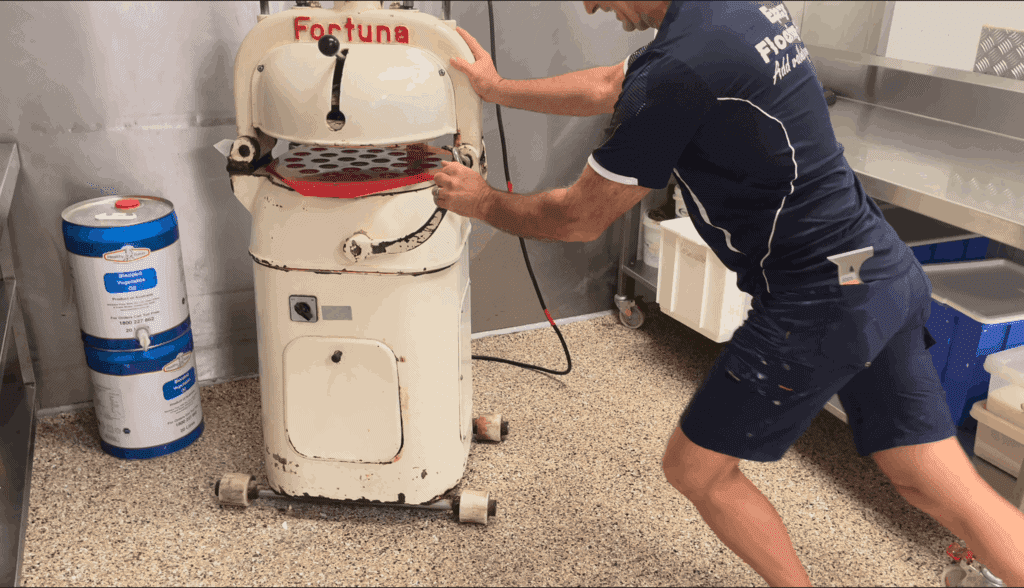
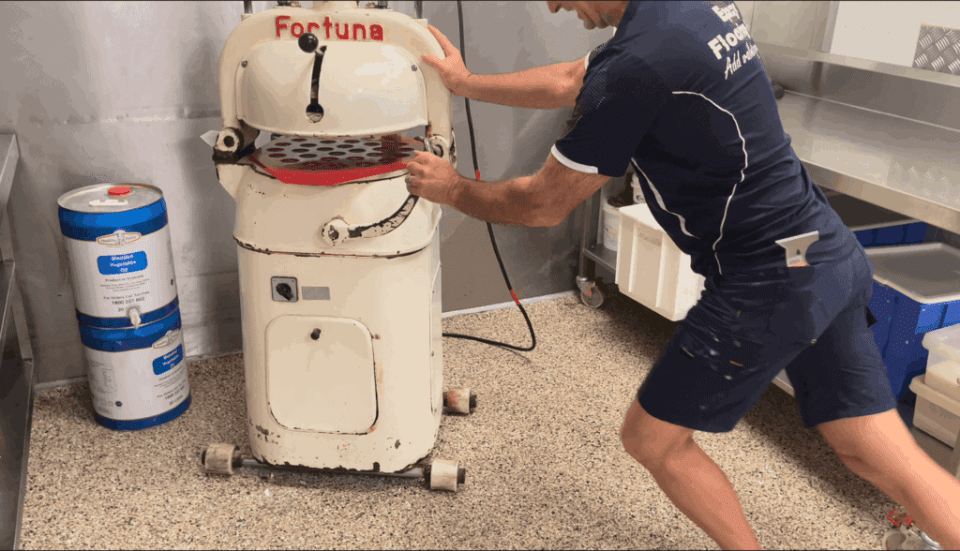
We completed the epoxy floor installation about 12 months ago, finishing late at night. By the next early morning, heavy machinery had to be dragged back into place – some weighing as much as 250 kilograms.
This kitchen’s equipment is notoriously difficult to move because the casters are old and jammed, meaning the machines were literally dragged across the floor surface.
Despite this extreme stress, the damage to the floor was minimal. The floor was barely scratched or marked, demonstrating the resilience of the epoxy coating. This example is particularly striking because it shows that the floor can maintain its integrity even under the harshest conditions.
What Caused the Minimal Damage?
The key to the floor’s durability lies in the materials used. For this kitchen, we applied the Epoxy2U 6150RC epoxy combined with an Epoxy2U Polyaspartic Top Coat. This combination creates a tough, resilient surface that resists wear and tear.
The floor’s seamless nature also plays a significant role. Without joints or seams, there are fewer weak points where cracks or scratches can develop. The embedded flakes help distribute pressure evenly, reducing the risk of localised damage.
Why Commercial Kitchens Are a Great Test Case
Commercial kitchens are one of the most demanding environments for flooring. They experience high foot traffic, frequent movement of heavy equipment, exposure to moisture, chemicals, and temperature fluctuations. If an epoxy floor can survive here, it’s a strong testament to its durability.
In this particular case, the kitchen operates almost 24/7, which means the floor is subjected to constant use. The fact that the floor was installed just hours before the heavy equipment was moved back in adds an additional challenge, as the epoxy coating had a limited curing time.
This means that while the floor is incredibly tough, it’s also important to allow adequate curing time before subjecting it to heavy use. Scratches or marks are possible if the floor is stressed too soon after installation, but under normal circumstances, this is easily avoided.
What This Means for Your Epoxy Flooring
If you’re wondering whether epoxy flooring will scratch in your home or commercial space, here are some practical takeaways based on the evidence:
- Durability is exceptional: Epoxy floors are highly resistant to scratches and wear, even under heavy equipment and constant use.
- Seamless floors reduce weak points: Without joints, there are fewer places for damage to start.
- Material quality matters: Using high-quality epoxy and top coats, like Epoxy2U products, dramatically improves scratch resistance.
- Proper curing time is critical: Avoid heavy traffic or dragging equipment on the floor for at least 24-48 hours post-installation to allow the floor to fully cure.
- Extreme cases are rare: For most residential and commercial applications, everyday use will not scratch the floor.
Backing It Up: Our 20-Year Warranty
To give you peace of mind, we back our epoxy flooring with a 20-year warranty. This warranty reflects our confidence in the product’s longevity and resistance to damage, including scratches. It’s a promise that your investment will stand the test of time, whether in a busy commercial kitchen or a high-traffic retail environment.
The long warranty also means that any concerns about scratching or wear should be minimal, as we have seen firsthand how resilient these floors are under extreme conditions.
Additional Tips for Maintaining Your Epoxy Floor
While epoxy floors are tough, proper maintenance helps keep them looking their best and extends their lifespan. Here are some tips:
- Clean regularly: Use a soft broom or mop to remove dirt and debris that could scratch the surface.
- Avoid harsh chemicals: Use cleaners specifically designed for epoxy floors to prevent damage to the coating.
- Protect high-traffic areas: Consider mats or rugs in entryways to reduce dirt and grit.
- Address spills quickly: Prompt cleaning prevents staining and surface damage.
- Schedule periodic inspections: Check for any signs of wear or damage and address them early.
Conclusion: Will Epoxy Flooring Scratch? The Bottom Line
After examining the performance of a full-flake seamless epoxy floor in one of the busiest commercial kitchens, it’s clear that epoxy flooring is incredibly resistant to scratching. Even when subjected to heavy equipment weighing hundreds of kilograms, the floor showed minimal damage just hours after installation.
For most users, whether residential or commercial, the likelihood of scratching an epoxy floor under normal use is extremely low. The key is to use high-quality epoxy products, allow proper curing time, and maintain the floor correctly.
With a 20-year warranty backing the product, you can have confidence that your epoxy floor will stay looking great and performing well for decades.
If you’re considering epoxy flooring and are concerned about durability, I hope this detailed look at real-world performance helps answer your question: will epoxy flooring scratch? The answer is yes, it’s virtually bulletproof.
For more information or to see examples of our epoxy flooring installations, feel free to explore our YouTube channel and get in touch with us.